


UAE Free Zones List 2026: Complete Guide to Free Zone Options for Startups and Investors
The United Arab Emirates operates more than 40 specialized free zones, each designed around a particular industry, market, or type of business. In 2026, these zones remain one of the fastest and most flexible ways to launch a company in the Emirates, offering full foreign ownership, streamlined licensing, and access to world-class infrastructure. However, choosing the wrong zone can significantly increase costs or restrict your ability to trade in certain markets.
Why Choose a Free Zone in 2026?
Free zones continue to attract entrepreneurs because they simplify company formation and reduce bureaucracy. The main advantages include:
- 100 percent foreign ownership with no requirement for a local sponsor or partner.
- Full repatriation of profits and capital.
- Exemption from import and export duties within the designated zone. Note that customs duties become payable when goods are transferred from a free zone into the UAE mainland market.
- No personal income tax and, for qualifying businesses, a 0 percent corporate tax rate.
- Fast licensing, often within a few days or weeks.
- Flexible visa quotas, including investor, employee, and family sponsorship.
At the same time, the rules have become more precise since corporate tax was introduced. A free zone company can still pay 0 percent corporate tax on qualifying income, but it must meet the “qualifying free zone person” conditions, maintain adequate economic substance, prepare audited financial statements, and comply with transfer pricing documentation requirements where applicable. Therefore, free zone selection in 2026 is not only about cost, but also about substance, compliance, and banking accessibility.
Key Factors to Consider Before Choosing a Zone
- License activity. Each zone has an approved list of activities. Some cover thousands of general trading, service, and consultancy categories, while others focus narrowly on media, finance, healthcare, or logistics.
- Target market. Free zone companies are generally designed for international business and re-export. If you plan to sell directly to UAE mainland customers, you may need a distributor, a branch, or a dual license arrangement.
- Physical presence. Packages range from a virtual desk or shared flexi-desk to dedicated offices and warehouses. Visa quota is usually linked to the size of the licensed office.
- Budget and renewal costs. Entry-level packages appear cheap, but visa fees, medical insurance, attestation, and renewal charges can add up. Compare the total first-year cost rather than only the license fee.
- Banking reputation. Some free zones are viewed more favorably by UAE banks than others. A zone with strong compliance history and clear documentation can make corporate bank account opening significantly easier.
- Specialized legal framework. DIFC and ADGM operate under their own common law systems, which can be an advantage for financial, fintech, and holding company structures.

Major UAE Free Zones for Startups and Investors
Dubai Free Zones
DMCC (Dubai Multi Commodities Centre). Located in Jumeirah Lakes Towers, DMCC is one of the most recognized free zones globally. It is especially strong for commodities trading, gold and diamonds, crypto and Web3 companies, and general trading. Its reputation helps with corporate banking, and the zone offers a wide range of office solutions and startup packages.
JAFZA (Jebel Ali Free Zone). Situated near Jebel Ali Port, this is the preferred choice for logistics, import/export, manufacturing, and industrial operations. It provides integrated access to sea freight, warehousing, and land transport corridors, making it ideal for businesses with heavy supply chain requirements.
DIFC (Dubai International Financial Centre). DIFC is a common law jurisdiction focused on banking, asset management, fintech, insurance, and family offices. It suits investors who need strong regulatory credibility and access to international capital markets.
Dubai Airport Free Zone (DAFZA). Positioned close to Dubai International Airport, DAFZA is tailored for aviation, trading, electronics, and logistics companies that depend on fast air cargo.
Dubai Silicon Oasis (DSO). This technology-focused zone supports software development, engineering, R&D, and innovation-driven startups. It is a practical option for tech founders seeking a credible tech ecosystem.
Dubai Internet City, Dubai Media City, and Dubai Knowledge Park. These interconnected zones cater to IT and software companies, advertising and production firms, and training or educational providers respectively. They offer strong industry networks and sector-specific licensing.
Meydan Free Zone. Known for cost-effective packages, including e-commerce, professional services, and freelancer licenses. It is popular among remote entrepreneurs and digital businesses starting with a limited budget.
Dubai Design District (d3). Best suited for fashion, design, art, and creative agencies. It connects businesses with creative communities and showroom space.
Abu Dhabi Free Zones
ADGM (Abu Dhabi Global Market). Located on Al Maryah and Al Reem islands, ADGM is an international financial centre with English common law. It attracts funds, fintech firms, professional service providers, and holding companies seeking a respected regulatory environment.
KEZAD (Khalifa Economic Zones Abu Dhabi). One of the largest industrial and logistics hubs in the region, KEZAD is linked to Khalifa Port and major transport networks. It is the preferred destination for manufacturing, heavy industry, and large-scale warehousing.
Masdar City Free Zone. Focused on clean technology, renewable energy, sustainability, and green innovation. It is a strong choice for startups in the climate and energy sector.
twofour54. Abu Dhabi’s media and entertainment free zone, covering broadcasting, content production, gaming, and digital media.
Sharjah Free Zones
SHAMS (Sharjah Media City). Offers affordable media, creative, and e-commerce licenses with fast processing. It is a popular low-cost alternative for content creators, freelancers, and online businesses.
Hamriyah Free Zone. Strong for industrial, trading, and logistics companies, with direct access to a deep-water port.
SAIF Zone (Sharjah Airport International Free Zone). Good for trading, light manufacturing, and air logistics due to its airport proximity.
Sharjah Research, Technology and Innovation Park (SRTIP). Focused on research, education, technology, and knowledge-based ventures.
Ras Al Khaimah Free Zones
RAKEZ (Ras Al Khaimah Economic Zone). RAKEZ offers a broad range of activities, including trading, services, industrial operations, and startups. It is known for competitive pricing, flexible office options, and a strong reputation for stability and ease of doing business.
Fujairah Free Zones
International Free Zone Authority (IFZA). IFZA has become one of the most popular choices among international entrepreneurs due to its clear pricing, digital-friendly setup, and extensive activity list. It is often used for trading, consulting, e-commerce, and holding companies.
Fujairah Free Zone and FOIZ (Fujairah Oil Industry Zone). These are relevant for logistics, trading, maritime activity, and oil and gas-related services due to Fujairah’s position as a major bunkering and shipping hub.
Ajman and Umm Al Quwain Free Zones
Ajman Free Zone (AFZ). Offers cost-efficient packages for trading, services, and industrial activity, with proximity to major ports and Dubai.
UAQ Free Trade Zone. One of the most affordable options in the UAE, suitable for small trading companies, service providers, and first-time entrepreneurs looking for a simple setup.
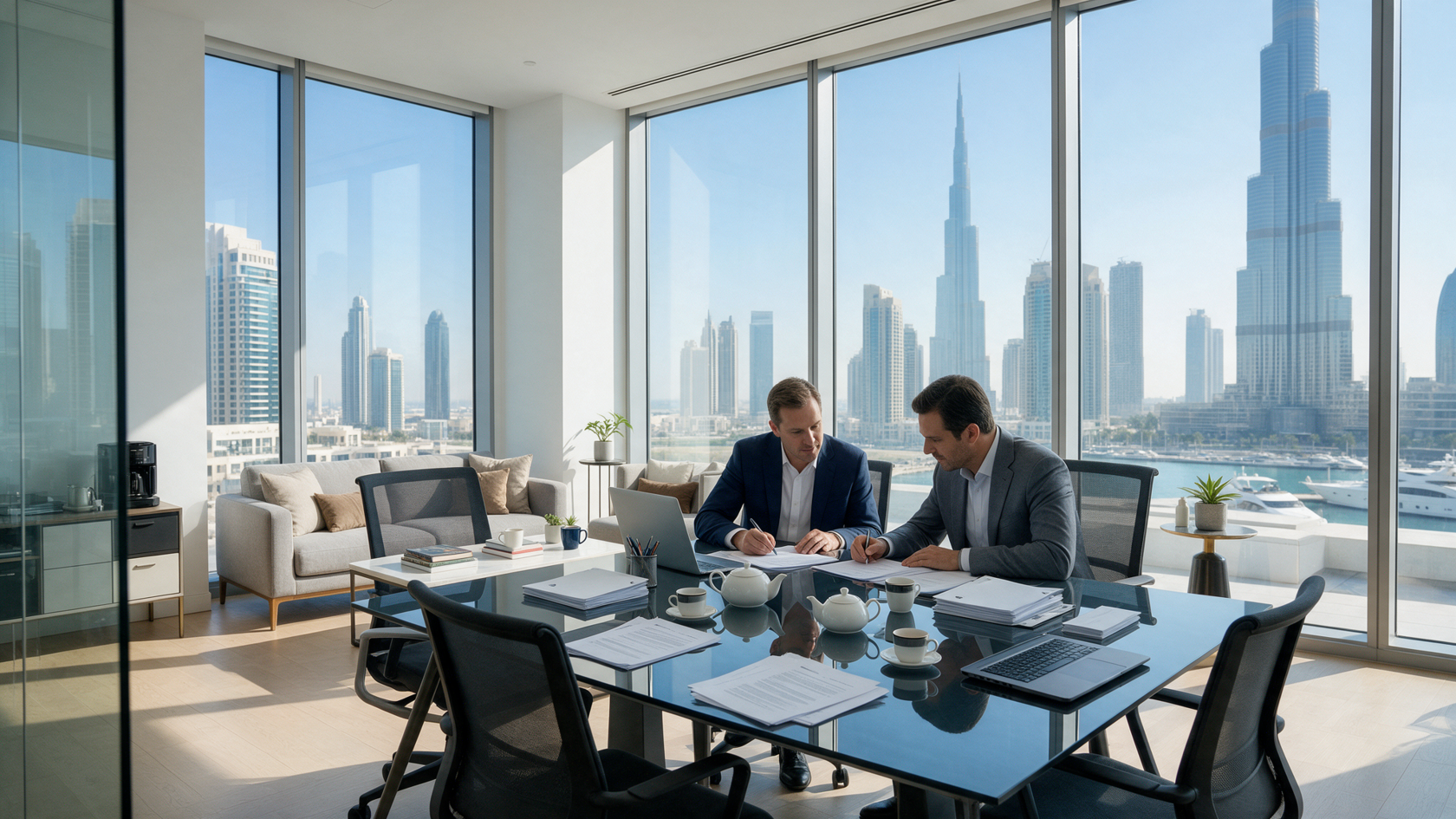
MARINA Business Solutions can help you compare free zone options, select the right license and legal structure, prepare and submit the application, arrange visas and Emirates ID processing, and coordinate the corporate bank account opening. With practical guidance from MARINA Business Solutions, you can launch a compliant, bankable, and growth-ready company in the most suitable UAE free zone from day one.