



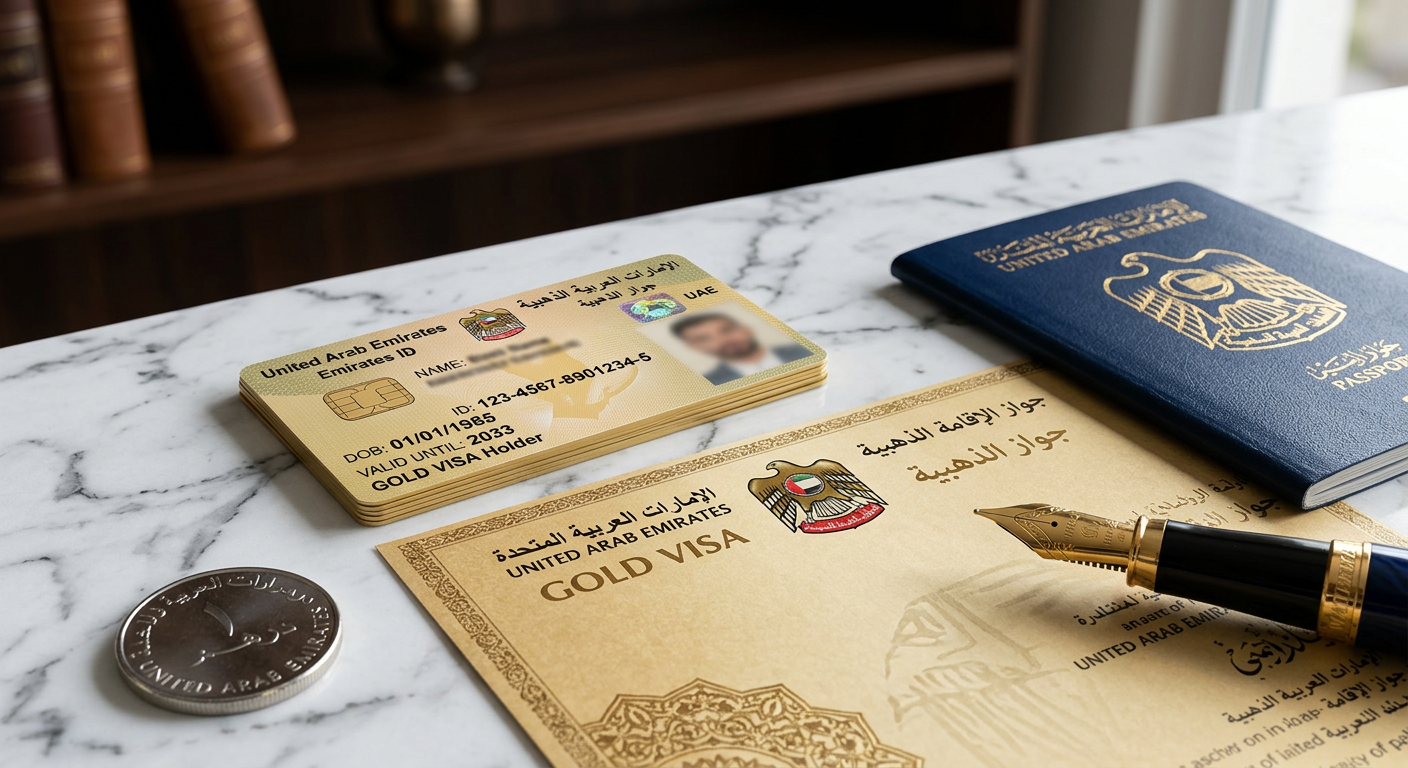
How to Obtain a UAE Residence Visa
Over recent decades, the United Arab Emirates has transformed from an oil-dependent region into a global hub for capital, talent and innovation. By creating a unique ecosystem where living comfort goes hand in hand with economic freedom, the country has attracted millions of expatriates from all over the world. The UAE’s residency visa system is thought out to the last detail: it offers dozens of legal grounds for long-term residence, from setting up a business to purchasing property. The question of how to get a residence visa in Dubai is most often resolved through property acquisition: a two-year visa is granted upon purchasing any property, while investments from 2 million dirhams pave the way to a 10-year Golden Visa.
A UAE residence visa is an official status that allows a foreigner to live, work, study and use the local social infrastructure. It is often linked to the “Emirates ID”. Since the Emirates is not a classical immigration country, a UAE residence visa becomes the only way of long-term legalisation. In 2026, the system continues to improve, offering ever more options for different categories of citizens.
General Principles of Residency
First of all, it is worth grasping the philosophy behind local migration policy. A UAE residence permit is inseparably linked to sponsorship. The sponsor can be an employer, one’s own legal entity, a spouse, or the applicant themselves in the case of property purchase or investment. The basic principle is that residency status is cancelled as soon as the basis for it ceases. There are long-term programmes for 5 and 10 years that provide greater flexibility.
The validity periods of residency visas vary:
- Standard employment – 2 years.
- Investor visa – 2 years (the requirement for a minimum property value for sole owners has been abolished; for joint ownership – each party’s share must be at least 400,000 AED).
- Golden Visa (for investors from 2 million AED, entrepreneurs, talents) – 5 or 10 years.
- Green Visa (for freelancers and skilled specialists) – 5 years.
It is important to understand that obtaining a residence visa requires physical presence in the country. You will need to undergo medical testing, submit biometrics and receive an Emirates ID (the official identity card for UAE residents). The card production time is typically 3 to 10 working days. Without this card, it is impossible to officially live, rent an apartment or open a bank account.
Bear in mind that Dubai is only one of the seven emirates. Although its migration rules are almost identical to federal ones, local authorities have their own nuances in terms of processing speed. For business, Dubai offers dozens of free economic zones, whereas Abu Dhabi places its bets on industry and energy. The choice of a particular emirate depends on your goals – be it working in the financial sector or living a quiet life by the sea in Ras Al Khaimah. For Russians, a UAE residence visa is available on the same terms as for citizens of other countries: there are no quotas or closed lists.
Main Benefits of the Status
Upon becoming a UAE resident, a foreigner gains access to unique opportunities:
- Tax advantages. Individuals pay no tax on salary, dividends or capital gains. There is also no inheritance tax.
- Banking system. Easy account opening at international banks, access to multi-currency transfers.
- Quality of life. An unprecedented level of safety, world-class infrastructure, high standards of healthcare and education.
- Mobility. You can freely enter and exit the country throughout the validity period of the visa. A residency visa has no travel limits, unlike a tourist visa.
Investment Programmes and the Golden Visa
For those with freely available capital, purchasing property is the most straightforward way to legalise one’s status. However, there are a few pitfalls. If the property is registered to a single owner, a two-year visa can be applied for regardless of the asset’s value. In the case of joint ownership, each investor’s share must be at least 400,000 dirhams. Otherwise, the conditions remain the same: registration of ownership and submission of an application. The changes make obtaining a visa through property more flexible and accessible for a wide range of investors.
If your goal is residency status, you can buy an apartment in Dubai in projects such as JVC (Jumeirah Village Circle) or Dubai Sports City. Since 2023, an important change has been in effect: if you purchase property with a mortgage, visa approval can be obtained only on condition that the applicant’s own down payment constitutes at least 50% of the property’s value. The property purchase must be preceded by an approval from the Dubai Land Department (DLD) or an analogous body in another emirate.
The Golden Visa itself represents a fundamentally different level. It does not require the continuous presence of a sponsor and allows living in the country even while spending up to 6 months continuously abroad. To obtain it, you need to invest 2 million AED. How it works:
- You purchase one property worth 2 million AED.
- Or acquire several properties whose total value equals that figure.
- Or place a deposit in a local bank (a fixed-term deposit of 2 million AED for 2 years).
Approval usually takes 2 to 4 weeks, faster than the standard procedure. The visa is issued for 10 years, with the possibility of automatic renewal provided the investment is maintained. It is important to note that the Golden Visa is granted not only for property purchases. It is awarded to leading scientists, world-renowned doctors, medal-winning athletes, as well as outstanding students of UAE universities. Creative professionals may also qualify for this status, but a recommendation from the relevant ministry is required. A key advantage of the long-term visa is the ability to bring family members (spouse, children up to 25 years old) under the same terms, with no additional financial requirements.
Financial Details and Requirements
- Minimum value: for joint ownership – each investor’s share from 400,000 AED; for the 10-year visa – from 2 million AED.
- Type of property: residential, commercial or industrial. Leasing land with the right to develop is permitted.
- Valuation: the property must be indexed by the DLD at current market value. If you bought an apartment through an assignment, the value may be reassessed.
- Sponsor: for a standard investment, the applicant acts as their own sponsor (sponsoring themselves and family members). No sponsor is required for the Golden Visa.
- Number of transactions: selling a property after obtaining the visa is allowed, but to renew the status you must either purchase a comparable property or have owned it throughout the entire residency period. If a flat is sold immediately after the card is issued, the visa will be cancelled.

Employment and Business Immigration
Obtaining a UAE residence visa through employment is the classic path taken by 80% of expats. The procedure begins with signing an employment contract with a local employer. Legislation protects employees’ rights: the labour contract must be concluded in accordance with the standards of the Ministry of Labour. The employer is obliged to cover the flight, medical insurance, accommodation and the visa itself. Employment visas are valid for 2 years, with subsequent renewal.
For highly qualified specialists (doctors, engineers, IT experts, managers) an accelerated process is available via the Federal Authority for Identity and Citizenship (ICP). The employer submits an electronic application, after which the employee undergoes a medical examination and receives an Emirates ID. Requirements for the employee:
- A valid passport (at least 6 months validity at the time of application).
- Higher education diplomas must be translated into Arabic and legalised through the Russian Ministry of Foreign Affairs and the UAE consulate.
- Minimum salary (for some categories – 10,000–15,000 AED per month). For the Green Visa in employment – at least 15,000 AED.
- Proof of professional experience (employment record or references).
A UAE residence visa through employment in a free zone has its own advantages: salary is paid in dollars or dirhams, zero tax, access to international banks. However, the visa is directly tied to that zone. If you resign, you have a 30–90 day grace period to find a new job or change your status.
Business Immigration: Setting Up a Company
Entrepreneurs can obtain a residence visa through their own business, and such an opportunity is indeed provided for. You may register a company on the Mainland or in a Free Zone. The differences are:
- On the Mainland, you can trade on the domestic market without intermediaries, but a local partner (51% of shares) is required for certain types of activity, although since 2021 this requirement has been abolished for many sectors.
- Free Zone – 100% foreign ownership, but the business is restricted to operating within the zone or exporting.
To obtain a visa through business setup, you will need:
- A licence from the relevant authority (DED for the Mainland, FZ Authority for free zones).
- A legal office address. In most zones, a physical workspace is mandatory.
- Share capital (from 50,000 AED to 1 million AED depending on the company type and zone). In practice, it is often sufficient to place a deposit in a bank or provide a bank guarantee.
- Visa quota. Typically, 1 to 6 employee visas (including yourself) can be arranged per licence. The larger the office space, the higher the quota.
The business visa is issued for 2 years. To renew it, the company must be active, have submitted reports or at least have a bank account with turnover. If you registered a company but have conducted no activity for more than 6 months, the authorities may withdraw the visa.

Freelancing and the Green Status
The modern UAE economy is designed for remote workers. In 2022, the government introduced a new category – the Green Visa. This is a 5-year status that requires no sponsor. It is intended for skilled specialists, freelancers and investors. A Green Visa can be obtained by meeting one of the following conditions:
- Employment: a labour contract with a UAE company, a salary of at least 15,000 AED per month and an active 2-year contract.
- Freelancing: holding a freelance licence and proof of an annual income of at least 360,000 AED over the previous 2 years (or 30,000 AED per month). This requires bank statements, client contracts and tax declarations.
- Self-employment: a higher education diploma (Bachelor’s or Master’s) and proof of income.
UAE residency in freelancer status is an ideal option for digital professionals: programmers, designers, marketers, consultants. There is no need to open a full office or pay large taxes. It is enough to purchase a licence and sign a service contract. A freelance visa is issued for 2 years if it is a standard one, or for 5 years if it is a Green Visa. Freelancers have the right to live in the UAE, rent accommodation, open accounts and bring their families. Admittedly, to sponsor a spouse or children you must prove a total income of no less than 10,000 AED per month for a standard visa, or 15,000 AED for a Green Visa.
Conditions for Remote Workers
The UAE has also introduced the Virtual Working Program (for remote work), though it is more of a tourist arrangement. However, for those who wish to obtain full residency, freelancing or a contract with a local company are the only paths. Obtaining a residence visa in Dubai as a freelancer is easier than in Abu Dhabi – there are more free zones there that focus on creative industries.
Education
A student visa is another direct route to residency. Foreign students enrolled in an accredited UAE university can obtain a residence permit for the duration of their studies. The visa is issued for 1 year and renewed annually subject to academic performance and the availability of a sponsor. Students are allowed to work no more than 20 hours per week, and upon graduation can switch to an employment visa within 6 months.
Conditions for obtaining a student visa:
- Enrolment in an accredited university (the list is available on the UAE Ministry of Education website).
- Medical insurance.
- Financial support (a parent sponsor or a bank account with no less than 2,000–3,000 AED per month for living expenses).
- Age (usually up to 30, though exceptions exist for Master’s students).
Family Reunification
A UAE residence visa for Russians also opens up opportunities for family relocation. Family members can be sponsored subject to a simple rule: the sponsor’s monthly income must be at least 10,000 AED. This is a fairly high threshold, but it is easily met by most employed expats.
To obtain a UAE residence visa for a spouse or children, a marriage or birth certificate is required. Despite both Russia and the UAE being parties to the Hague Convention, full consular legalisation is required in practice: translation into Arabic or English, notarisation, an apostille in Russia, then legalisation at the UAE consulate. Only after this will the documents be accepted by the immigration authorities. In practice, many families prefer to arrange a visa for one spouse – the one whose income is higher or whose profession is in demand in the Emirates. The other spouse gets a dependent visa, which grants the right to reside but not to officially work without a separate permit from an employer. The entire process takes two to four weeks, provided the documents are correctly prepared and the sponsor holds a valid Emirates ID.
Retirement Visa
The UAE is an attractive place to live after retirement. The retirement visa allows staying in the country for up to 5 years (with renewal) without needing to work or run a business. A retiree can sponsor themselves provided they are 55 or older and meet one of the following requirements:
- Financial assets: real estate in the UAE worth at least 1 million AED.
- Income: a stable monthly income from 15,000 AED.
- Bank deposit: a fixed deposit of at least 500,000 AED for 3 years.
The retirement visa is granted for 5 years, then renewed. The individual may not work in the UAE but can receive passive income. This programme is very popular among Europeans and CIS nationals who wish to live in warm weather, with good healthcare and tax advantages.
Renting Housing for Residents
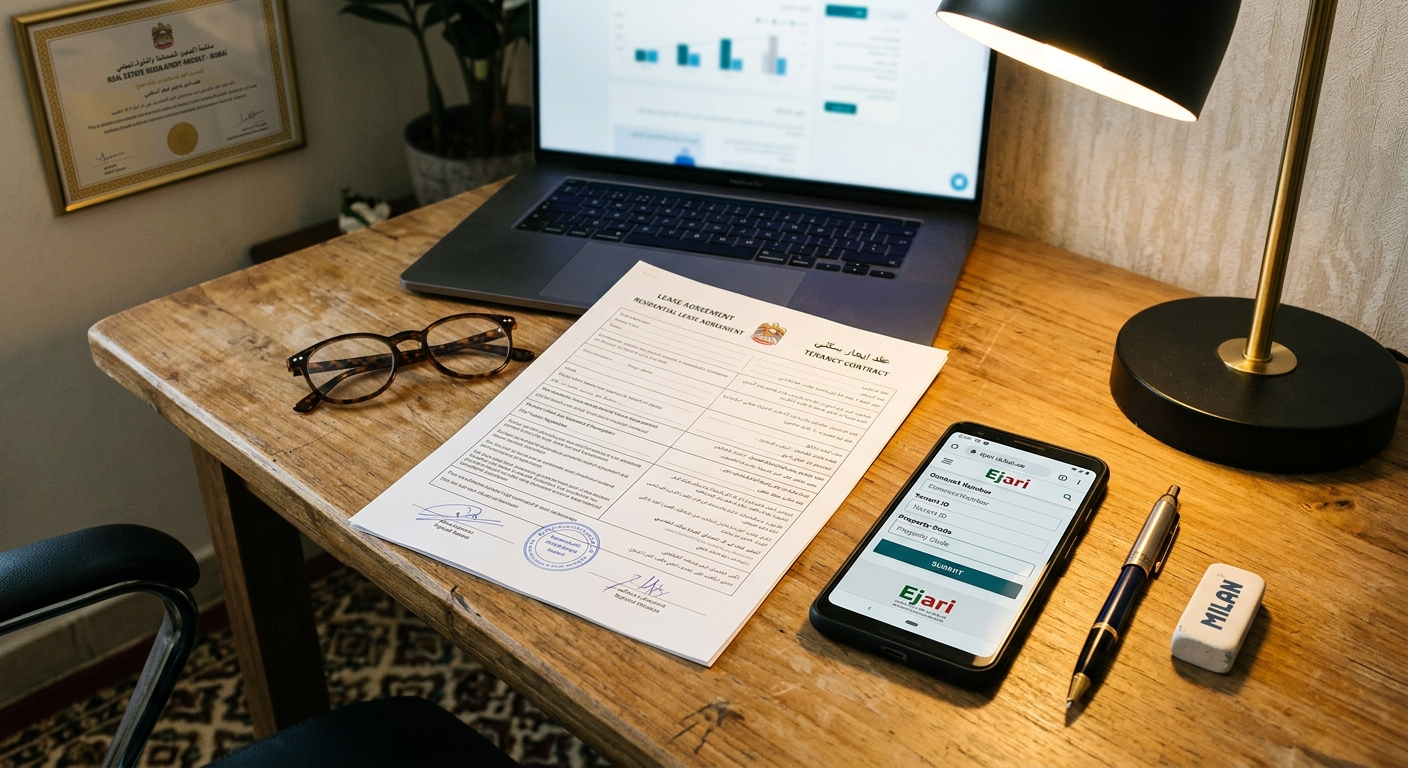
After successfully obtaining a residence visa in Dubai or other emirates, a resident gains the opportunity to officially rent accommodation through the mandatory government system Ejari. Ejari (meaning “my contract” in Arabic) is a unified electronic platform of the Dubai Land Department that registers all rental agreements in the emirate. The system was introduced to make the rental market transparent, protect the rights of both tenant and landlord, and eliminate fraudulent schemes involving multiple letting of the same property.
Without registering the contract in the Ejari system, renting in the UAE is unofficial, meaning the tenant has no legal protection. In practice, this means that without an Ejari certificate it is impossible to:
- connect utility services – electricity and water (DEWA) in your name;
- sign a contract with an internet service provider (Du or Etisalat);
- set up a P.O. Box, which is often required for receiving official documents and bank notifications;
- confirm your place of residence when renewing or replacing your Emirates ID;
- open a bank account or obtain a school certificate for a child.
The Ejari system supports two main contract types. Ejari Standard – a standard 12-month lease agreement between individuals. Payment can be split into several cheques (from 1 to 12), although recently many landlords require payment with one or two cheques. Ejari Holiday Homes – for short-term rental of tourist accommodation (from 1 day to 6 months). This type suits those planning to rent out an apartment on a daily basis.
When renewing a residency visa, the General Directorate of Residency and Foreigners Affairs (GDRFA) may request a document confirming the applicant’s place of residence. Such a document is the Ejari Certificate. If a resident does not have a registered lease agreement, the visa renewal may be refused or additional clarifications requested. This is why seasoned expats advise registering the contract immediately after moving in, without waiting until the last minute.
Practical Application Steps
Regardless of the chosen basis, the procedure is uniform.
- Determine the grounds for obtaining the status. Decide which status suits you: employment, student, investment, freelance, Golden or retirement visa.
- Compile the documents: a passport copy, a colour photo, results of the medical examination at an accredited UAE centre with tests for major infections, as well as, if required, a criminal clearance certificate translated and apostilled, a bank statement or proof of income, and a valid local medical insurance policy.
- Submit the application. It is processed by the employer, sponsor or immigration department. Submission is done online through government portals or free zone systems; the process kicks in quite quickly once the state fee is paid.
- Pay the fees. All necessary fees are settled, including the governmental processing charge, medical exam, issuance of Emirates ID, and processing service charges.
- Receive the outcome. After approval, within a few working days you receive a notification, and the electronic visa is linked to the Emirates ID, which is collected at a post office or delivered by courier.
The UAE offers one of the most flexible and attractive migration systems in the world. The main thing is to be prepared for bureaucracy, financial transparency and the need for physical presence at some stages. A UAE residence visa is not just a piece of paper, but a key to life in a country with one of the best economies on the planet.